Categories
Law

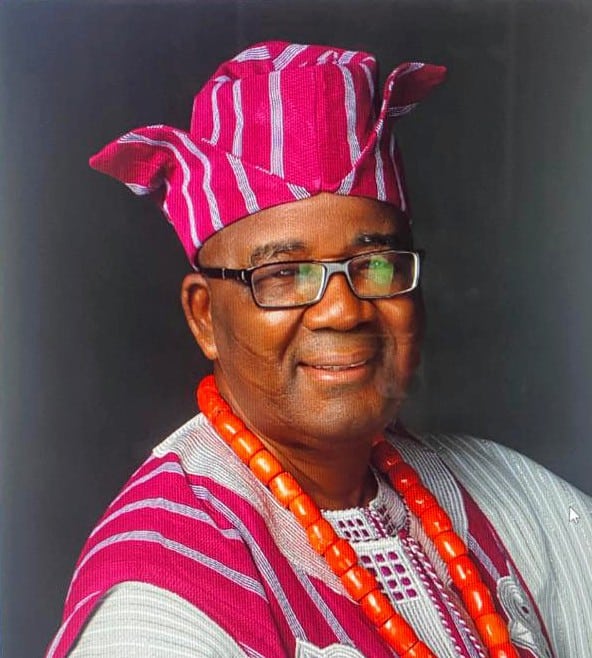
The Life And Times of A Senior Advocate of Nigeria.


Being a paper delivered at the July 2021 monthly meeting of the Nigerian Bar Association, Unity branch Abuja by Adegboyega Awomolo, SAN, FNCIArb, FNIALS, Life Bencher.

I want to thank the Chairman and Executive Committee of the Unity Branch of the Nigerian Bar Association, Abuja for the honour of sharing with my colleagues, memories of important events in my legal career of 43 years at the Bar and almost 30 years at the Inner Bar.
As you know everything in one’s life is part of one’s history. We write our history every day and such experiences are either positive or negative but believe me, there can be no success story without its preceding pains, losses and breath taking moments. “No cross no crown” the saying goes.

I want you to remember that who you meet and what you hear from people, especially, if it is the truth, can change the course of your life for the better. The key to topmost heights is humility, obedience and faith that can move mountain. Humility comes before honour.

IN THE BEGINNING WAS GOD

The truth is that God is the designer and the supervisor of my legal career. I graduated with LL.B Hons (Second Class Lower Division) at the University of Ife, Ile-Ife in 1977. I was called to Bar on Friday July 7th 1978 at the Nigerian Law School, Victoria Island, Lagos at about the age of 31 years. It was a great and unforgettable celebration that day, the ceremony was the joy of lawyers called to the Bar, parents and relatives. We were not allowed to take more than one guest into the Lagos Law School dinner hall. Chief G.C.M. Onyuike SAN was the Chairman Body of Benchers and at the top table were Chief F.R.A. Williams SAN, Hon. Justices Bello Sowemimo, Idigbe, Analogu, Fatai Williams, Kayode Esho Justices of the Supreme Court and many other very senior and notable Legal Practitioners.

The joy of the day was so much but I took note of the Chairman’s charge. It deeply impacted on my life and I prayed to God to take me to the highest rank in the legal profession. From that day, I resolved to remain at the Bar, actively practising law in all courts and at all levels.
On Monday 18th August 1978, we reported at the Kwara State NYSC Camp for orientation programmes at Kwara State College of Technology. During the orientation I met an older person called Mr. Ibrahim Kuranga, a ground staff of NYSC Kwara State. He took me as a younger friend, told me about his life and he counseled that, I must, in my career as a Lawyer, be disciplined and prayerful. He told me of many lawyers, he knew, who fell from grace to grass due to inability to discipline their bodies. Through this man, I was approached by the Head of Department of Law, Kwara Polytechnic to teach Criminal Law, Evidence Law and Commercial Law for Diploma in Law classes. I taught many students from 1978 to 1982. I was at his Muslim firdaus in 2010 at Ilorin when he passed on. Today I remember him and forever I will be grateful for the impact his words of wisdom had on my growth in life. This relationship taught me never to look down on any man no matter his status. May God grant him peace forever. I made several friends at the Camp and I enjoyed myself.The Legal Aid Council officials came to the Orientation Camp and gave us one week training on procedure, advocacy and management of legal aid services to inmates in prisons in Ilorin, Lokoja, Okene and New Bussa; Borgu prisons.

DO NOT DESPISE THE DAYS OF THE LITTLE BEGINNINGS
I urge all young Legal Practitioners that in the practice of law everything is not money. Pro bono services are services to God and none is ever lost. Whoever excessively loves money can never have enough and everyman who gained freedom from prison and escaped police brutality through your efforts will never forget.
As a young lawyer, you have the potentiality to become the best and wear the highest rank and stand out among your peers. You must show readiness and pant after good works.
God bless Mallam S.B.A Laaro, the then DPP in the Ministry of Justice, Ilorin. After the Orientation Camp of the NYSC about 10 Legal Practitioners were posted to Kwara State Ministry of Justice. From the first week in the Ministry, I never allowed the DPP to rest until he began to assign case files from the Nigeria Police to me for legal opinion and possible prosecution. I committed myself to not less than 50 files within 2 weeks and most of my opinions were approved by the DPP.
My colleagues made jest at me and they called me names but in the end I was awarded the “Best Corper of the Year” and decorated by the Military Administrator of Kwara State, at the passing out Dinner. My Learned friends, know that as a Junior in chambers, you are not in competition with anybody. You must be yourself and be outstanding in whatever assignment is given to you. Disregard the noise of the market around you. Your success will attract negative reactions and discouraging comments of your peers but remain focused.

After about 6 months in the Ministry of Justice, I was moved to the Legal Aid Council. As a green wig, in the Legal Aid Council I was assigned a murder case, prosecuted by Ministry of Justice Director of Public Prosecution, to defend at the High Court, Ilorin.The knowledge I had in reviewing Police case files in the office of the DPP assisted me greatly, because the experience exposed me to the methods of police investigations. There were always loop holes in the investigation, unfortunately. I lost the case but the woman was not sentenced to death by hanging but found guilty of culpable homicide not punishable with death, subject to prerogative of mercy by the Governor. Do you believe there is power of witchcraft? She was a victim of that belief. The Honourable judge understood the plight of the young woman but the law must take its course. She was guilty and sentenced according to the law.

BE CAREFUL, PEOPLE SEE YOU AND KEEP NOTE OF YOU EVERYDAY
After my youth service, I joined the Law ofiice of Tunji Arosanyin & Co Ilorin in 1979. There was the general election to the office of the Governor of Kwara State and the Legislature. My boss was a big man in National Party of Nigeria (NPN) and so the office was involved in election petitions at the Tribunal, I was exposed to Senior Legal Practitioners like Chief Remi Fani Kayode SAN, Chief Sobo Sowemi SAN, Chief Richard Akinjide SAN and I as one of the junior Counsel for Alhaji Adamu Attah, the NPN Governor-elect. I was charged with daily recording of proceedings, research and drafts of most of the submissions. It was my first challenge and exposure to private practice under a Senior Counsel. Let me reiterate that the heights that these great men of the law reached and kept was not accidental or achieved by sudden flight but through years of hardwork.
They commended my good conduct throughout the hearing at the Tribunal presided over by Honourable Justice Ovie Whiskey who was then the CJ of Bendel State. I learnt so much from these Seniors but I must say it was without pay. (laugh)
I will always remember how they encouraged me and fired me to face my adversary with courage. They were giants at the Bar who had made notable names as we read in Law Reports and famous for political offices they once occupied.
RELATIONSHIP WITH COURTS/COLLEAGUES
I ask you to show utmost respect to the Court-Judge in session. Do not wear wrong uniforms otherwise the Court may not see you.
Do not patronize the Judge, be polite and courteous. Be alert to take hints, from the Bench which most times are helpful.
Don’t attempt any act of familiarity or show that you know the Judge, even if you do. Avoid argumentative traits which may show you as arrogant or disrespectful. They have the law in their bosom from where the Bar draws from.
Do not dress or undress in the face of the Court, it is disrespectful or contempt in the face of the Court. I see this very often in our Courts unfortunately even by Senior lawyers removing their wigs and gown in the open court room.
Avoid harsh and impolite language against the judge or your colleagues whether orally or in writing. As a junior, I was a “radical” but as I grew older at the Bar, I realized that Judges discuss the behavior of Counsel who appeared before them and compare notes. You may be marked down and lose help when you need their discretion.
Do not quarrel with colleagues because of any client. Clients come and go. Your “Learned Friends” are your “best friends”. If anyone insults you, ignore it and don’t be distracted. Annoyance or anger will rob you of success and losing cases drives away potential clients.
Do not share your fees with anybody. If you are lucky to have cases that ought to feature as headlines in the media but did not, for any reason, don’t worry yourself time will soon come when the media gentlemen will look for you.
Avoid undue emotional involvement or entanglement with any client concerning money. In divorce matters, avoid intimacy, particularly, with the women, otherwise your fees may not be paid or your marriage may be affected. It has happened before and may happen to you. Avoid fleshy lust and be professional in dealing with your clients and adversaries.

KEEP USEFUL AND TRUTHFUL FRIENDS; RECOGNIZE TALENTS OF JUNIORS AND REWARD THEM
I have always believed that a good professional friend is an asset. Cultivate the friendship of lawyers whether older than you, your age or junior to you. Chief Charles Akinlolu Olujimi SAN was my confidant and friend from Ife. He met me at Ilorin in 1979 when he came to serve as a Youth Corper. We lived together in a flat.
He was and still till today a man who value and respects his friends, extremely matured but can be too blunt in fact. He and I cultivated the habit of reading at least one judgment per day and update our practice notes; learn from us. We went through All Nigerian Law Reports, West African Court of Appeal Reports, All England Law Report and Nigerian Monthly Law Report and took notes of all decisions. We still continue our reading habit till date. I was lucky that Chief Wole Olanipekun, SAN my senior, and I related as brothers and friends. He is a man of excellent character, meticulous and a bold advocate.
In 1983, Mallam Yusuf Ali (now SAN) joined my chambers as a youth Corper and remained with me for about 11 years before he opened his own law office. He became SAN a few years after. He was very loyal and committed to maintaining the Code of ethical Conduct of Awomolo & Co. We NEVER bribed any Judge and I did not receive any complaint about him even when I went to Osun State to be the Attorney General and Commissioner for Justice. He was responsible, disciplined and accountable. He is my pride at the inner Bar. Indeed all my juniors, learnt something from me, I can say today some of them are SANs and Judges of Superior Courts.

IMBIBE THE CULTURE OF INTEGRITY AND HONOUR
Clients must trust you and the trust is earned. Your integrity will and should be your selling point. The attitude of clients to appeal in Kwara State then, was to leave all lost cases to God. Counsel compiled records and transmitted same to the Court of Appeal, Kaduna. Wole Olanipekun SAN and few of us like Bayo Ojo SAN, Lawal Rabana SAN, Yusuf Ali SAN, Bayo Adelodun SAN and few others used to drive together from Ilorin to Kaduna for appeals until the Ilorin division of the Court was created. We related as friends even when we had to oppose one another in Court. We ate and drank together as friends.

We accorded highest respect to seniors like Chief D.A. Akintoye, J.O.A. Ijaodola, Chief Tunji Arosanyin, Mr. Faloranmi, J.A. Alhaji Aliu Salmana SAN, Alhaji A.G.F. Abdulrazaq SAN, Mr. David Folusho Babalola (later Hon. Justice). All these were role models that impressed us. It was a great opportunity to cross swords with them in courts. They were always available to help provided the case was not one in which they were interested.

Most of the cases we had were land disputes or chieftaincy cases and most clients found it convenient to pay counsel with land or crops like yam, corn, palm oil etc. I learnt never to turn a client away because he could not pay my fees. You must take the brief first, put in your very best and that will encourage the client to pay his fees as you record successes or refer to you those who can pay. In fact, we were more concerned with cases to engage us or keep us busy. Idleness and lack of work to do is like dying slowly after reading and reading with nowhere to apply it.

BE A MAN OF YOUR OWN MIND
In choosing a path or career in the legal profession, you must know yourself, your capacity and follow a career path that you can optimally utilize to achieve your potentials. You have great potentials and the capacity to beat my record of being elevated to the rank of SAN at 14 years at the Bar. Few younger colleagues have beaten my record though. I assured myself that I needed the covering of a Senior after the NYSC. I am one of those who subscribe to the idea of 5 years tutelage after the call to Bar. It is dangerous and unhelpful to open a law office directly after being called to the Bar. You need the guide of a Senior Lawyer. You need the clout and exposure under a Senior for you to succeed.

WHATEVER YOU SO SOW YOU WILL REAP
In 1992 January Chief Wole Olanipekun SAN was appointed the Attorney General of Ondo State and myself as Attorney General of Osun State. On 7th July 1992 when I was about 14 years at the Bar, I was elevated, preferred and decorated with the rank of Senior of Advocate of Nigeria on 20/07/1992. I did not know any member of the LPPC. I did not even know the date of the meeting but I was told that because I was just 14 at the Bar, I would have had to wait for the following year. I later heard that some members of the Committee pleaded for me. Therefore, be good to all who come across you in practice. It is uncharitable for anyone to plant into your head that you need several millions of Naira to bribe anyone to become a Senior Advocate of Nigeria. It is all lies. I will forever be grateful to Aare Afe Babalola SAN, Hon Justice Kabiri Whyte JSC, Hon. Justice Saidu Kawu JSC, Hon Justice T.A Oyeyepo CJ Kwara State then and Hon Justice Akin Apara the CJ of Osun State then for their contributions to the elevation.

NIGERIAN BAR ASSOCIATION:
AS A LAWYER YOU MUST SUPPORT THE NIGERIAN BAR ASSOCIATION
When I got to Kwara State in 1978, the Bar Association was synonymous with a Senior who had been Chairman for over 10 years. Wole Olanipekun, Bayo Ojo, myself and few other “young radicals” of like minds forced the holding of the Ilorin branch election and we elected young lawyers as Chairman and Exco members. In subsequent elections, we repeated election of young Lawyers as Chairmen and this boosted the public image of the Bar Association. We conducted Law Week Programmes, Seminars and Public Lectures. In 1990 I was elected the Chairman of the branch with a narrow margin of one vote to defeat my opponent.
Since 1987 I have been attending the meetings of the National Executive Committee of the NBA. The membership of the NEC exposed me to active leaders of the Association across Nigeria. I became very familiar with Presidents and big names at the Bar like Chief B.O. Benson SAN, Charles Idehen, Chief R.O.A. Akinjide SAN, Prince Bola Ajibola SAN, Chief Dr. Mudiaga Oje SAN, Mr. Alao Aka Bashorun, Dr. Nwakama Okoro SAN, Chief N.N Anah SAN, Chief Olisa Chukwura SAN, Chief A.N Anyemene SAN, Alhaji Abdullahi Ibrahim SAN, Chief Philips Umeadi SAN, L. Ladapo SAN, Sir Clement Akpambo SAN, Chief Debo Akande SAN, Chief Anthony Mogboh SAN, Chief A.A Fadairo SAN, Kehinde and Idowu Sofola SAN, Mrs Aderinsola Balogun, Kanmi Ishola Oshobu, Otunba Ajayi Okunnaga SAN, Alfro Fayoku, Mr. J. B Magiyagbe SAN of Kano, Alhaji Ali Kaloma, Alhaji Bashir Dalhatu, Galadima Adamawa, Murtala Aminu, Sir Alfred Eghobamien SAN, Chief Bankole Oki SAN, Chief (Mrs) Priscilla Kuye, Chief T.O.S Benson SAN, Gally Brown Peterside SAN, G.A Graham-Douglas SAN, O.C.J. Okocha SAN, Olisa Agbakoba SAN and many others. Knowing and relating with these respectable members of the Bar helped in building recognition and contacts. You need to know and relate with respectable seniors at the Bar.

MY ROLE MODEL
YOU MUST CHOSE A ROLE MODEL
The wise man says humility comes before honour and only the humble will inherit the world. Learning the law, Practicing the law with integrity and Honour are the best any lawyer must aspire to be. However, your first 5 years of legal practice would determine how far “a green wig” can go. You must choose a role model, a mentor and a respected leader in the profession from whom you will gain inspiration as they will sometimes be available to encourage you at downtimes. There are senior Lawyers who are perceived to be involved in the “infamous conduct” of compromising the Bench, they are known by the juniors. There are some that juniors see as “Janakara Practitioners”. You must avoid them in choosing your role model or mentor. Avoid any confrontation with any senior.

I was lucky to have the privilege of Aare Afe Babalola SAN as my father in the Legal Profession. He was available to give me a shoulder to rest on. He gave me every chance and opportunity to grow in the knowledge of the law. He was a workaholic and dogged advocate. He taught me to be “charitable and kind to everyone around me, be generous and be a giver, a giver never lacks, as you give so you will receive”. So he taught me. I am grateful, Oga. A junior must not expect a rosy beginning. You must trust that tomorrow, notwithstanding what today may appear to be, will be better.
Juniors worry much that they, like Seniors do not enjoy patronage. Everything takes time. You can without offending the Legal Practitioners Act, market yourself in this modern day of social media blow your trumpet. Market yourself by writing articles in legal journals and other media. Chief Tunji Arosanyin gave me the platform and opportunity and I will forever remember because he gave me his office to practice, manage and to cut my legal teeth from 1979-1983.

LIFE AS CHAIRMAN OF COMMITTEE OF CHAIRMEN AND SECRETARIES
In 1992, the Nigerian Bar Association at its annual conference held in Port-Harcourt was unable to conclude its election of officers. This was followed by various court orders and counter orders obtained by aggrieved members. The falcon did not hear falconers and all the efforts of the seniors at the Bar failed in resolving the “impasse”. The Federal Military Government under General Sanni Abacha, intervened at the instance of the Body of Benchers with a Decree that dissolved the NBA and gave the Body of Benchers powers to appoint administrators for the NBA.
The NBA members all over the country did not agree to the Decree and at a joint meeting of Ikeja/Yola branches held in Lagos in 1996 to fashion the way forward, the Chairman of Ikeja branch Mr. Ogunniyi nominated me and I was appointed the Chairman of all the 44 branches Chairmen and Secretaries. In that capacity, I travelled across the country and held meetings in almost all the branches between 1996-1998. We thereafter organized the Jos Conference. At the Jos plenary conference, we amended the Constitution of the NBA and limited officers tenure to 2 years only. The members of Sub-Committee, as evidence of our integrity disqualified ourselves from contesting any office. We conducted the election to the office of President and other officers of the NBA. Mr. T.J.O. Okpoko, SAN from Warri branch was elected the new President of the NBA in 1998.

Today I feel happy that the Nigerian Bar Association still exists in Nigeria. There is no need to quarrel or “fight to finish” on NBA elections to serve. In our days, we paid for our transport and received no remuneration for being officers of the NBA. As a legal practitioner, you must be committed to the ideals of the NBA. You must be ready to serve in whatever position you are considered suitable. It does not matter whether you are appreciated or not. Never expect any reward or commendation from anyone.

BEING HUSBAND AND SENIOR OF A LAWYER
It is a divine design of God that my wife became a lawyer. Before she became a lawyer, she annually accompanied me to all Lawyers’ conferences in several locations in Nigeria. She also went with me to all International Bar conferences as our annual vacation. She was a graduate of Chemistry which she taught for about 10 years. She knew all the big names I related with in the legal profession. Perhaps, the exposure to the good life at the Bar was part of the attraction that made her to become a lawyer. In 2013, she became a Senior Advocate of Nigeria. She was my biggest critic and restraint against youthful “shenanigans” at conferences, because she was my “conference material” But suffice it to say that she was and still is a great asset in research and financial discipline. She is my only junior that cannot resign or set up her own law office. Since she knows how hard it is to get money she also checks the reckless spending and “unnecessary or unworthy charities” God was at the beginning. He saw me through all the stages, because he designed it and I am very hopeful he will see me to the end to truly end well. I give Him glory.

Thank you again for the honour to be here to share my professional life with you and I hope you have all learnt one thing or another.
God bless you all.

Asiwaju Adegboyega Awomolo, SAN, FNCIArb, FNIALS, Life Bencher.

Culled from The loyal Nigeria lawyer.
Categories
Law

A COMMENTARY ON THE CONSEQUENCE OF THE SUPREME COURT DECISION IN JEGEDE V AKEREDOLU VIS-A-VIS MATTERS ARISING.By Mustapha Babalola Toheeb.

A COMMENTARY ON THE CONSEQUENCE OF THE SUPREME COURT DECISION IN JEGEDE V AKEREDOLU VIS-A-VIS MATTERS ARISING.
By Mustapha Babalola Toheeb.
Recently, the Supreme Court pronounced a judgement in favour of Governor Rotimi Akeredolu in respect of his re-election as governor of Ondo State, which was received with great joy and happiness especially amongst the faithfuls of the rulling party as the apex court decision was a split judgment of four to three. It was just the decision of one Justice that would have turned the tide against him, but he was “lucky” to have escaped the hammer. The Supreme Court, in a split decision of four to three had dismissed the appeal filed by the governorship candidate of the Peoples Democratic Party (PDP), Eyitayo Jegede against the election of Governor Rotimi Akeredolu in the Ondo State governorship election.

Due to the fact it was a judgment that involved a Constitutional issue, a panel of seven Justices of the Supreme Court sat over the appeal as against the usual five Justices. While four out of the seven-member panel of justices of the apex court dismissed the appeal, three of the Justices, including the presiding justice, Mary Peter-Odili were of the view that the appeal should be allowed.

In its split judgment of four against three by the seven member-panel, which sat on the Ondo governorship election petition, the Supreme Court had contended that the reason it did not sack Governor Rotimi Akeredolu of the state, was because the Peoples Democratic Party (PDP) and its governorship candidate in the October 10, 2020 election, Eyitayo Jegede, failed to join the National Chairman of the party’s Caretaker Committee and Governor of Yobe State, Mai Mala Buni, even when the issues revolved around him.
As expected, the judgement has attracted a lot of reactions and analyses from legal experts, as there seems to be divided views as regards the position of law on whether Mai Mala Buni, the Governor of Yobe State and the current National Chairman of the Caretaker Committee, APC is allowed to be at the helm of affairs of the Caretaker Committee considering the provisions of Section 183 of the Constitution of the Federal Republic of Nigeria, 1999 (as amended) which provides as follows:
“the governor shall not, during the period when he holds office, hold any other executive office or paid employment in any capacity whatsoever.”
However, Article 17 (iv) of the APC constitution is clear and states that no official of the party shall at same time hold any executive position in any government institution.

Now, the above submissions particularly the laws and recent rulling of the Supreme Court has attracted two interpretations or views from legal experts across the country. The first view which was initially voiced by the Minister of State for Labour, Festus Keyamo (SAN), he was of the view that the recent rulling of the Supreme Court in the Jegede v Akeredolu case particularly taking into consideration the provisions of Section 183 of the Constitution is to the effect that Governor Buni cannot hold any other position including the position of the National Chairman of APC Caretaker Committee and that the Supreme Court has just weaponised all those that would be aggrieved by the APC Congresses to proceed to court to Challenge the competence of the Buni-led CECPC to organise the Congresses and National Convention. He further advised the APC to halt all preparations and conduct of congresses nationwide forthwith, having analysed the implications of the judgment.

Apart from Keyamo, Chief Anthony Ajulo SAN, a constitutional lawyer has maintained the same position and according to him,the Nigerian constitution does not permit the same person to hold two executive positions, therefore, he called for the immediate resignation of Buni as the Acting National Chairman of the ruling party.
Chief Ajulo then added, “It is therefore incontrovertible that the continuous stay of the Governor as Chief Executive Officer of the All Progressives Congress runs contrary to the provision of the Constitution and as such may be an albatross on the party, as all he had done before would be null and void, including the nomination of candidates within the period of his so-called Leadership of the party.”

According to the Special Adviser to the President on Political Matters, Senator Babafemi Ojudu and Senior Special Assistant to the President on Niger Delta Affairs, Senator Ita Enang have also maintained the same position with the above submissions of the learned silks and also joined the call for the Buni committee to be disbanded.

On a final note, Akintayo Balogun, a private legal practitioner has also aligned himself with the first view and also opined that if Buni had been joined as a party in the Jegede v Akeredolu suit, the judgement would have been in favour of Eyitayo Jegede, SAN and PDP, except if the Justices again find another escape route for the Respondents. It would have been another judgment from the Supreme Court and not majority of the electorate.
Furthermore, he was of the view that every activity(s), duty(s), task(s) and responsibility(s) of the Caretaker (interim) Chairman from inception of his duty as caretaker, to the day he hands over to a substantive chairman or to another caretaker chairman, is rendered a nullity and of no effect once “properly” challenged.

The other view which was led by Chief Adeniyi Akintola SAN, one of Akeredolu’s counsels during the election petition was of the opinion that by the pronouncements of the Election Petition Tribunal and the Court of Appeal which was affirmed by the apex court, Governor Buni could combine both party and elective positions and that the minority judgement stating that Buni can’t hold the two positions has no value.
He went on to assert that the provisions of Section183 of the constitution, according to the justices wasn’t violated by Buni. That was the reasoning of the tribunal.The Court of Appeal even affirmed the election petition stance that Section 183 wasn’t breached.

The Learned Silk is not the only one on this path as the Deputy Senate President, Ovie Omo Agege also aligned himself with the second view and furthermore opined that going by the explicit provision of Section 183 of the Constitution of the Federal Republic of Nigeria, 1999 (as amended), it is absolutely impossible and untenable to argue that the provisions of Section 183 bars a Governor from being a Chairman or member of a Caretaker Committee set up by his or her political party. Moreso, the position of the Chairman of a Caretaker Committee cannot by any sense of imagination, logic or simple common sense be classified as being a salaried Executive office.

He added that there is no law under our legal jurisprudence that bars or prohibits a Governor who is a member of a political party and won elections under the political party from carrying out specific assignments on behalf of his party. How this will amount to holding an Executive office is beyond every stretch of human comprehension.

On a final note, he opined that Section 183 of the Constitution of the Federal Republic of Nigeria, 1999 (as amended) only bars a Governor from holding Executive positions like being a Minister, or any other executive positions for which he shall be paid for. It does not by any scintilla of imagination, render the appointment of Governor Bumi as APC Caretaker Committee Chairman incompetent and will not in any way, affect the legality or competence of the APC scheduled Congresses.

Going by the analyses from both sides, it is imperative that the rulling party need to get it right this time particularly on how to solve this legal conundrum as any wrong decision on the part of the party might threaten the existence of the party. Subsequent court pronouncements and time will tell whether an attempt to continue with Governor Buni on the part of the rulling party would not jeopardize their future or lead to a misfortune which might be worse than what happened to the party in Zamfara few years ago but before then God bless Nigeria.

ABOUT THE AUTHOR:
Mustapha Babalola Toheeb is a Pupil of Law, a content creator, a blogger & a student of Faculty of Law, Bayero University, Kano. He is the Founder of Lex Updates Publications, and the Zonal Director, Directorate of Programs, Policies and Projects, North West Zone, Law Students Association of Nigeria.
He is interested in advocacy, academic writing, legal writing/history, activism and a plethora of positivism. To reach him,email:toheebmustapha15@gmail.com or contact/whatsapp:08106244073.

REFERENCES.

  1. APC IN JEOPARDY OVER BUNI’S CONTINUED STAY
    THE IMPLICATION OF THE SUPREME COURT JUDGMENT TODAY IN JEGEDE VS AKEREDOLU AS IT AFFECTS THE APC IS THAT THE PARTY MUST HALT ALL PREPARATIONS AND CONDUCT OF CONGRESSES NATIONWIDE FORTHWITH
    AS NATIONAL CHAIR BY THISDAY NEWSPAPER.
  2. GOVERNOR MAI MALA BUNI AS APC INTERIM CHAIRMAN, A NULLITY ABI INITIO BY AKINTAYO BALOGUN ESQ.
  3. WHY MAI BALA BUNI SHOULD STEP DOWN NOW BY ANTHONY AJULO SAN.
  4. THE IMPLICATION OF THE SUPREME COURT JUDGMENT TODAY IN JEGEDE VS AKEREDOLU AS IT AFFECTS THE APC BY FESTUS KEYAMO SAN.
Categories
Law

Chambers in Faculty of Law, BUK conduct congresses as Akanbi Yusuf, Lawal Habib, Hauwa Ahmad, Kamaldeen Muhammad emerges as new Chamber Heads.

Chambers conduct congresses as Akanbi Yusuf, Lawal Habib, Hauwa Ahmad, Kamaldeen Muhammad emerges as new Chamber Heads.

In the past few weeks, the faculty experienced a change in leadership across all the chambers and associations, the first was the Al Maslaha Chambers where Habib Lawal Olayinka was appointed as the new Mufti of Al Maslaha Chambers taking over from Mallam Maihakuri, the former head of the chambers.

Equity Chambers also elected its new exceutives which saw Yusuf Akanbi emerge as the Principal Partner taking over from AbdulBasit Shuaib, the former head of the chambers.

Liberty chambers also held its congress which led to the dissolution of the 2019/2020/2021 excos and the election of the new executives which saw Hauwa Ahmad Muhammad as the new Executive Director of the chambers.

Solace Chambers also held its congress which led to the dissolution of the 2019/2020/2021 excos and the election of the new executives which saw Kamaldeen Muhammad as the new Attorney General of the chambers.

The Law Clinic also experienced a change of leadership as Yusuf Emiola emerged as the Director General, Law Clinic succeeding the indefatigable Sulaiman Abdullahi.

Categories
Uncategorized

JUST IN: YUSUF EMIOLA EMERGES AS PRESIDENT, STUDENTS UNION BAR,BUK.

Yusuf Emiola emerges as the new President, Students Union Bar, BUK.

The irrepressible and seasoned student legal practitioner, Yusuf Olalekan Emiola before his appointment has been in active practice for close to five years and has been involved in notable cases like the election petition case involving Sir Kuli Kuli, Captain Idris Ahmed Vs. Speaker, Students Representative Assembly& 1 ors (2018), where he got a judgement in favour of the Welfare Director of the Students Union Government 2017/2018 who was arbitrarily removed from office by the defendant.

In addition, he handled the case of Yusuf Emiola VS. Welfare Director, Students Union, BUK. (2017).

Apart from his court room exploits,he has been a major contributor to the development of the BUK Law Clinic over the years particularly during the STUNT project and other projects which he participated in.

Not resting on his laurels, he is a recipient of many awards such as Legal Icon of the year in 2018 and in 2019, he emerged winner STUNT Project, sponsored by Youth Alive Foundation with support from Ford Foundation.

It’s obvious that this appointment is well deserved as Mr Emiola has contributed immensely to the development of the BUK Bar.

Congratulations sir!

Categories
Uncategorized

Formation and registration of statutory marriage; who has the power between Ministry of interior and local government? By Toheerat Kemi Adegbiji

Formation and registration of statutory marriage; who has the power between Ministry of interior and local government?


Registration of Marriage is one of the requisites that evidenced the conduction of a valid Statutory Marriage under Section 30 and 32 of the Marriage Act, before such can be registered, validly tendered and admissible in a court of competent jurisdiction ; it has to be registered and issued by an appropriate authority. What constitutes this appropriate authority has been subjected to controversies among the people on who should issue the Marriage certificates, even though, same has been given judicial notice by Federal high court. Opening to the discourse as to whether it is the Ministry of interior or the Local government council under the provisions of Marriage Act as well as the Constitution of Federal Republic of Nigeria 1999 as amended.
The bone of contention of this assignment therefore, is to examine whether or not there is a conflict in the provision of Marriage Act on the registration and issuance of marriage certificate. In order to determine whether there is a conflict in the said provision however,it is pertinent to look at the power conferred on both the Ministry of interior as federal government agency and Local Government council under item 61, exclusive legislative list; second Schedule of the 1999 Constitution and item 1(i) of fourth Schedule to the Nigerian 1999 constitution as amended to register all birth, death and Marriages respectively as well as to make submission as to the validity of marriages registered by the ministry of interior and that of local government council in exercising their constitutional powers.
REGISTRATION AND ISSUANCE OF MARRIAGE CERTIFICATE BY MINISTRY OF INTERIORS ; WHETHER OR NOT THERE IS A CONFLICT WITH THE PROVISION OF MARRIAGE ACT.
It’s not of dispute that while the issues relating to statutory Marriages are within the exclusive legislative list under item 61, second Schedule to the 1999 Constitution ; the constitution has also conferred power on the Local government council under item 1(i) of fourth Schedule to the Nigerian 1999 constitution as amended to register all birth,death and Marriages. Also, the procedure to be taken in the registration of Statutory marriages has been provided for under section 30 (1) of the marriage Act which reads thus: ” Every registrar shall forthwith register in a book to be kept in his office for such purpose and to be called the Marriage Register Book, every certificate of the marriage which shall be filed in his office according to the Form F in the First Schedule; and every such entry shall be made in order of the date from the beginning to the end of the book, and every entry so made shall be dated on it is so entered, and shall be signed by the registrar,and such book shall be indexed in such manner as it is best suited for easy reference thereto.”
Thus, the question of who can validly register statutory marriage between the ministry of interior and the Local government council is not clearly provided for under the Marriage Act as the Act under section 30 (1) only use the word “Registrar” whose office is directed by the minister under section 5 of the Marriage Act. Nonetheless, the Nigeria 1999 Constitution has clearly shown the power of the federal government in the exclusive legislative lists under item 61 to the second Schedule which provides : ” The formation ,annulment and dissolution of marriages other than marriages under Islamic Law and Customary Law including matrimonial causes relating thereto.” And that of the local government under item 1(i)which provides : ” Registration of all births, deaths and Marriages”.
These controversies as to who can validly register Statutory marriages has now been given judicial notice by the Federal high court in the unreported case of HAASTRUP & ANOR v. ETI OSA LOCAL GOVERNMENT & 2 ORS (FHC/L/870/2002), where it was posited that those who can validly contract or celebrate marriages include the Ministry of Interior. However, with respect to registration of marriages, it is within the exclusive authority of the Registrar in the marriage district (Local Government) in accordance with the provisions of section 30(1) of the Marriage Act, section 7(5) Constitution of the Federal Republic of Nigeria 1999 and Paragraph 1(i) Fourth Schedule to the constitution.
Also, this decision has been upheld by the court in an unreported case of EGOR LOCAL GOVERNMENT, EDO STATE & ORS Vs. HON MINISTER OF INTERIOR & ORS (FHC/L/ CS/1760/16) in this case ; the suit was filed by some local government councils in Nigeria, challenging the power of the Federal Ministry of Interior to operate marriage registries.The councils are Egor Local Government (Edo), Eti-Osa Local Government (Lagos), Owerri Municipal Local Government (Imo) and Port Harcourt City Local Government Area (Rivers).The respondents in the suit are the Federal Ministry of Interior and the Attorney-General of the Federation.The issue for determination in the case was whether it is only local government authorities that can contract and register Marriages to the exclusion of such other authorities designated by the Ministry of Interior. Consequently, the Court merely upheld and re-affirmed the position in the Haastrup’s case, that the Ministry of Interior can validly conduct marriages but reserved the power for registration of marriages exclusively in the Local Government.
At this juncture, it is important to distinguished between Conduction of Marriages as well as Registration of Marriages. While the former deals with the process of forming a valid marriage contract which can be perfected by any licensed authorities, the latter comes after the marriage contract to evidenced that, marriage has been conducted between the patties which has a greater legal consequences where the due process is not followed.
Moreover, The recent move made by the ministry of interior to create marriage registries to conduct and issue marriage certificate in 11 states of the federation, these states includes : Ikoyi , Lagos State ; Abuja , Federal Capital Territory ; Benin , Edo State ; Owerri , Imo State ; Port Harcourt , Rivers State ; Kano , Kano State ; Jos, Plateau State , Enugu, Enugu; Kaduna, Kaduna; Ibadan , Oyo State ; and Makurdi , Benue State claiming that the formation of statutory marriages is within the exclusive legislative list and that it was the regulatory body for the conduct of statutory marriages and the issuance of marriage certificates. The Local government on the other hand sees this development as an infringement to their constitutional power and Function under 1(i) to the fourth Schedule to the 1999 Constitution.
On this note, the functions conferred on the local governments places no ban on the Ministry of Interior, licensed places of worship and other lawful authorities to contract and celebrate marriages. The court had also declared valid all marriages contracted under a licence granted by the Ministry of Internal Affairs, Director General of a state government in charge of marriages, any state ministry, or by any officer in any of the ministries. Based on the decision given in the Haastrup’s case, it only restrains the Ministry from further registration of Marriages. By implication, marriages registered at the Ministry of Interior before the decision in Egor Local Government V. Hon Minister of Interior are valid while further registrations conducted by the Ministry of Interior may be challenged.
It is however pertinent to state that : even though the registration and issuance of marriages is conferred on the Local Government, such must be exercised in accordance with the provision of Marriage Act as illustrated by the court in the case of Olumide Babalola V. Ikeja Local Government and Anor ( Suit NO. LD/1343GCM/16], the Claimant applied for a declaration that the local government does not have power to issue modified/customized Marriage Certificates different from the one provided for in Form E under Section 24 of the Marriage Act and a declaration that the Registered Trustees of Association of Local Governments in Nigeria (ALGON) Unified Marriage Certificate is unconstitutional, null and void. The Court affirmed the position with regards to the form of the Marriage Certificates, it however held that marriages that are already conducted and are not in conformity with Form E be regarded as good and valid in Law for all intents and purposes, there should however, be a reissuance of the proper certificate to all persons in possession of the “invalid certificates “and this will have no effect on the subsisting validity of the Marriage.
Conclusively, in light of the judicial authorities discussed above and in line with the relevant statutory provisions cited,one can validly conclude that while the local governments have the right to validly register and issue certificates of Marriages as conferred on them under item 1(i) of fourth Schedule to the Nigerian 1999 constitution as amended; so far such is comply with all the stipulated provisions in the Marriage Act, for the issuance of Form E and no other customized form is acceptable, failure to comply with the provision renders the whole process voidable ; the formation of Marriage is exclusively regulated by the Ministry of Interior under exclusive legislative lists, item 61 of the second Schedule to the constitution of Federal Republic of Nigeria, 1999 as amended. Hence, there is no conflict as regards the registration and issuance of marriage certificate, since each powers and functions of each tiers of government has been clearly defined under the constitution.

Categories
Uncategorized

The Rules of Professional Conduct 2007 and the Reality of the Legal Profession by Halimah Ummi Ismail

The Rules of Professional Conduct 2007 and the Reality of the Legal Profession.


Introduction
The legal profession like every other profession has it ethics and code of conduct guiding members of the profession. In order to maintain the standard, values, and integrity of the legal profession, the ethics of the legal profession in different regions places high professional standards for lawyers to abide by in discharging their professional duties, and day to day interactions with members of the society.
The legal profession is a profession for the diligent, those with integrity and good virtues, those who can discharge their professional responsibilities as required. Thus, the Supreme Court in the case of N.B.A vs Ohioma (2010) 14. N.W.L.R (PT.1231) 641 at 680 states:
“Legal practice is a very serious business that is to be undertaken by serious minded practitioners particularly as both the legally trained minds and those not so trained always learn from our examples. We therefore owe the legal profession the duty to maintain the very high standards required in the practice of the profession in this country.”
The legal profession all over the world have legal ethics that governs the conduct of legal practitioners, their duties to the Court, to the society, to their colleagues, and so on.
Being a profession that is of great importance to the society, the legal profession must keep up with societal changes, technological innovations and emerging trends. These can be done by reviewing the Code of Conduct governing legal practitioners when necessary, that way it won’t seem outdated, and it will conform with the social system.
The Rules of Professional Conduct 2007
The ethics of the legal profession in Nigeria has been codified in the Rules of Professional Conduct 2007 (RPC). This states out how legal practitioners should carry out their legal duties.
The RPC enacted in 2007 can be said to be a welcome development to the then members of the legal profession since they were subjected to a much more strict principles. In modern times however, the RPC no longer reflect the realities of the legal profession as some of it provisions have been influenced by the impact of technological innovations thereby making it archaic. In order to cater for the shift in time, some of the provisions of the RPC needs to be amended.
The Provisions of Section E of the RPC and the Impact of Technology and Social Media
Section E of RPC (Improper Attraction of Business) sets out the rules on the conduct of attracting legal business.
Rule 39 of the RPC deals with Advertising and Soliciting. Rule 39(1) provides:
Subject to paragraph (2) and (3) of this rule a lawyer may engage in any advertising or promotion in connection with his practice of the law, provided:
(a) It is fair and proper in all the circumstances
(b) It complies with the provisions of these Rules.
This appears to be an approval of advertising of the legal business as long as certain conditions are complied with. This is not the case as Rule 39(2) and (3) have clearly stated the boundaries within which such advertising must remain.
The legal profession is not immune to the influence of technology, and regardless of how conservative it is, technology has overtime found it way into the legal profession. As a result of the impact of technology, many countries have changed their Code of Conduct for legal practitioners especially as it relates to the rules of advertising and soliciting for legal business. The use of technology in providing virtual services and the use of Artificial Intelligence has affected the manner in which legal services are promoted.
Advertising to Prospective Clients
Rule 39 (2) (c) and (d) of the RPC provides:
A lawyer shall not engage or be involved in any advertising or promotion of his practice of the law which
(c) makes comparison with or criticizes other lawyers or other professions or professionals;
(d) Includes statement about the quality of the lawyer’s work, the size of success of his practice or his success rates
The above provisions can be complied with by traditional litigators. However, this is almost impossible for the modern day legal practitioners, commercial lawyers especially.
Some prospective clients seek for details from law firms or legal practitioners, what differentiate such law firm or legal practitioner, how they can perform better, and also what benefits the clients stands to gain from working with such law firm or legal practitioner. Releasing of the details required by those clients goes against the provisions of Rule 39 (2) (c) and (d) which prohibits comparison and statement about the lawyer’s quality of work.
The use of Website by Legal Practitioners
The RPC made mention of the use of note-papers, envelopes, and visiting cards, signs and notices, the publishing of books and articles, and email address. It however, did not include the use of website. Most law firms and legal practitioners both within and outside Nigeria now have an online presence through their websites where they promote their legal services to members of the public. Most clients will not even think of working with lawyers or law firms without websites.
The use of Social Media in Promoting Legal Services
Rule 39 (3) (a) states that a lawyer shall not solicit professional employment either directly or indirectly
(a) by circulars, handbills, advertisement, through touts or by personal communication or interview.
The use of social media by professionals to advertise their professional expertise is now a normal thing to engage in. Infact, not having a professional social media platform/s makes one look unserious and unprofessional. Members of the legal profession are also not excluded.
Having a standard social media platform like LinkedIn can promote people and assist them in achieving their aims. LinkedIn profiles now serves as online CV as people advertise their potentials and what they can offer to their targeted audience. Law firms are also not left behind as they also operate different social media handles.
The use of social media and websites by lawyers and law firms in Nigeria may not necessarily be against the RPC, the issue on ground is that it is almost impossible to use them without violating the provisions of the RPC.
Conclusion
The legal profession in Nigeria has not been able to embrace the standards required of the modern day legal profession. Nevertheless, legal practitioners in Nigeria have been influenced by technology and this has changed the way they perform their legal activities.
The RPC is an analog rule in a digital age as it does not tally with societal and technological changes. Although the RPC has been enacted to keep lawyers in check, it provisions will only be effective if it conforms with the current situations of legal practitioners.
Hence, amending the RPC to cater for the changes that are taking place in the legal profession is necessary. This will assist lawyers stay abreast while carrying out their legal duties. It will also promote the integrity of the Nigerian legal profession and assist it in keeping up with international standards.

Halima Ummi Ismail is a Law Student from Bayero University, Kano.
She can be contacted via email: ismailhalima99@gmail.com

Categories
Law

RAPE IN BOYFRIEND/GIRLFRIEND RELATIONSHIP, RAPE IN MARRIAGE, CONSENT AND MISCONCEPTION OF CONSENT by Badmus Uthman O.

MY COLUMN.

TOPIC: RAPE IN BOYFRIEND/GIRLFRIEND RELATIONSHIP, RAPE IN MARRIAGE, CONSET AND MISCONCEPTION OF CONSENT BY BADMUS UTHMAN O.

INTRODUCTORY PART.

Rape is a criminal offence under the Nigerian law, which is statutorily defined, and encapsulated with it elements under section 282 (1) of the penal code, and section 357 of the criminal code.

Rape is simply defined as intentional sexual intercourse with a girl or woman without her consent. The offence of rape against a person will not stand if there is agreement, and when full consent is obtained from a girl or woman by a man or boy to have intercourse with her. And to the extent of it expressions, the two sections provide for it elements  as follows ;

(1) Against her will
(2) Without her consent,
(3) With her consent but obtained by force or intimidation or by deception,
(4) With or without her consent but underage, I.e under the age of 14 or of unsound mind, and
(5) With her consent but under false representation. “A situation where he makes the woman to believe that he is her husband .

The main objective of the law is to regulate every activity of human beings in general, and to provide limitations, protections and also obligations for each aspect of human life. However, despite it struggle to capture every aspect, there are still some area where the provisions of the law is silent. Citing a case of study, the relationship which is commonly referred to as “girlfriend/boyfriend”, concubinage, and courtship are within the blind spot of the law and this eventually leaves these relationships unrecognized, uncovered, and unprotected by the law.

CAN A MAN OR BOY RAPE HIS GIRLFRIEND?, AND ALSO CAN RAPE OCCUR IN A LEGAL MARRIAGE?. EITHER CUSTOMARY OR STATUTORY MARRIAGE.

The first issue for determination is to determine whether or not there is a circumstance(s) where a boy or man can be found guilty of the offence of rape if he has carnal knowledge of his girlfriend, concubinage or courtship without her consent, by deception or by force. Despite being that they are both in a romantic relationship, whether publicly known or otherwise.

As cited and stated earlier in the fourth paragraph of this piece, the said relationships which were referred to as (boyfriend/girlfriend, concubinage or courtship) are not recognized by the law and every activity conducted under it is not guided by the law as well. By this so, a boyfriend doesn’t in anyway or manner under the authority of the existing Nigerian law(s) has any right over his girlfriend to give consent to sexual intercourse whether for once or all the time, this simply implies that any form of consent that may come to effectiveness in these relationships must always be discretional, it simply implies that the girl or woman in question must give consent willingly.

Furtherance, a girlfriend can neither be taken for granted nor could her consent be assumed or dispensed, just because of a mere fact that the girl or woman is a girlfriend or in a courtship with a boy or man.

The position of the law is clear, precise and concise as regards to this legal matter, the provision of the law is that, a charge of the offence of rape against an alleged boyfriend will sustain, and stand if he has carnal knowledge (sex) of his girlfriend “without her consent, against her will, by force or deception, and with consent but the girl in question is under-age”. Regardless of whether they are both in a mutual relationship or not.

In the case of  “THE STATE V IDOWU YESUFU (1979) 1 FNLR 174.”  the court held that  “THE RELATIONSHIP COMMONLY REFERRED TO AS “GIRLFRIEND/BOYFRIEND” OR CONCUBINAGE OR COURTSHIP OF A WOMAN BY A MAN DOES NOT IN LAW CONFER A RIGHT ON THE MAN TO HAVE SEXUAL INTERCOURSE WITH THE WOMAN…”,.

The honourable court further stated that”…THE WOMAN (Girlfriend) CANNOT BE TAKEN FOR GRANTED NOR COULD HER CONSENT BE ASSUMED OR BE DISPENSED WITH , IF THE MAN HAS TO HAVE SEXUAL INTERCOURSE WITH HER. This further clearly stated that an offence of rape will substantiate against a boyfriend if he has sexual intercourse with his girlfriend without considering her consent or take her consent for granted.

However, as to whether or not a husband can rape his legally married wife.

Simply, any form of sexual intercourse between a husband and his wife cannot in any form constitute the offence of rape, because marriage itself is consent to sexual intercourse.

This assertion received a judicial blessing in the case of R v Miller (1954) 2 QB 282 where the court held that “THAT THE APPELLANT COULD NOT BE GUILTY OF RAPE, AS THE IMPLIED CONSENT OF A WIFE TO HAVE INTERCOURSE WITH HER HUSBAND COULD ONLY BE REVOKED BY COURT ORDER OR A BINDING SEPARATION AGREEMENT. IN THE CIRCUMSTANCES, THIS CONSENT HAD NOT BEEN REVOKED. NEVERTHELESS, A HUSBAND WAS NOT ENTITLED TO USE FORCE OR VIOLENCE FOR THE PURPOSES OF EXERCISING HIS RIGHT TO INTERCOURSE; TO DO SO WOULD AMOUNT TO AN ASSAULT.

The Honourable court has  made it clear that “Use of force by a man to exercise his right to intercourse, would only amount to assault and not to rape.

MISCONCEPTION OF CONSENT,  VITATION OF CONSENT AND WHEN IS CONSENT NOT VITATED.

In addition, if eventually a girlfriend doesn’t actually give consent, but the boyfriend mistaken that she consented, he would be excused FROM criminal liability. Meanwhile, the evidential liability will be solely rested on him (that he must show, and satisfactorily prove that there was actually a mistake). however, it will be very difficult to prove that there was actually misconception considering the combined effect of section 37 and 39 of the penal code. By virtue of these two sections, consent will be invalidated if it is obtained without due care and attention, and if consent is given for fear of being injured, misconception of fact, and when the girl doesn’t understand the nature of what she give consent to or by a person who is under fourteen years of age.

More so, the law has made a vivid, clear, otherwise obvious distinction between submission, and consent. Although every consent involves submission, but a mere submission is not consent because a victim might submit herself in fear of the use of force on her, or being harm as the case maybe. See also (R v. Olugboja (1982) QB 320.

Nevertheless, it is not rape, and consent is not vitated if the lady understands the nature of the act, but only expected that she would be paid, since she is aware of the nature of the act and her consent wasn’t obtained through force or intimidation but only that the man or boy refused to pay for the service rendered. Then, it is not rape. Moreso, the offence of rape cannot surface or stand if the man promise her gifts, and later renounce it. See also R v. Linekar (1995) 3 ALL ER 69.

Consequently, consent would be generally vitiated if a guy induce a girl with alcohol, or any other intoxicating substance to such an extent that the girl is unable to give informed consent. Informed consent in the sense that, the girl or woman must be aware of the nature of the act, and  she must be in her right senses. See also R v. Wood (1982) 74 Cr App R 312.

Lastly, sexual intercourse between a man or boy and woman or girl engaging in a romantic relationship is a necessity, the law is not trying to regulate this mutual activity.

However, the provisions of the law is very strict about consent, because the right of the other gender must also be protected as their consent to this activity is mostly taken for granted, dispensed and obtained under undue care. Also, by virtue of the existing law, an underage girl does not have the ability to give consent to intercourse whether or not she is in a romantic relationship with a boy or man.

REFERENCES;
SECTION 282 (1) OF THE PENAL CODE.
SECTION 357 OF THE CRIMINAL CODE.
SECTION 37 AND 39 OF THE PENAL CODE.
FUNDAMENTAL PRINCIPLES OF NIGERIAN CRIMINAL LAW, BY ESA O. ONOJA.
THE STATE V IDOWU YESUFU (1979) 1 FNLR 174.
R V MILLER (1954) 2 QB 282.
R V OLUGBOJA (1982) QB 320.
R v. LINEAR (1995) 3 ALL ER 69.
R v. WOOD (1982) 74 CR APP R 312.

Categories
Uncategorized

An Assessment of Local Government Autonomy in Nigeria By Bello Abdulsobur Olalekan.

An Assessment of Local Government Autonomy in Nigeria.

Local Government is the third tiers of government. As the name implies,local government serves as an avenue to bring government to the grassroots. Be it as it may, According to orewa and Adewumi (1992:20) defines local government as: A system of local communities and towns which are organised to maintain law and order; provide some limited range of social services and co-operation of the inhabitants in joint endeavours toward the improvements of their conditions of living…..(1992:20). Appadorai (1975:287); Local government is government by he popularly elected bodies charged with administrative and executive duties in matters concerning the inhabitants of a
particular place or district.
There is no gainsaying that Local government is best practice in a democratic system of government than military because of the structure and nature of it’s constitutional responsibilities. This assertion can be corroborated by taking into cognizance, the popular definition of democracy coined from the word of Abraham Lincoln who sees democracy as “Government of the people, by the people, and for the people”. However, this is not to say that the military system of government does not recognise the Local Government as the third tier of government but it’s duties and responsibilities is more spelt out in civil- democratic system..

What is then Autonomy?
According to Wikipedia, Autonomy is the right or condition of self government..However Local government Autonomy connotes the process where the third tier of government is allowed to run its activities with little or no interference from the Federal or state government. Hence, the duties and functions of Local Government are explicitly and scrutiny spells out in the 4th schedule of the 1999 constitution .

At this juncture, the critical and fundamental question that might arise from the foregoing discussion is that,
does local government actually reserve the Autonomy to govern itself without undue interference from the other tiers of government (federal and/or state )?

This question arises as a result of the fact that over the years, local government in Nigeria have not been to stand the test of time in bringing government to the grassroots. It is debatable to say that the power and autonomy of local government are only spelt out in papper but in reality, they can be likened to a toothless bulldog. This is because the Autonomy that is expected to be enjoyed by this level of government in other to see to the welfare and well-being of the people at the grassroots have been hijacked by the state government in the way and manner stated below;

Financial Control; by the virtue of section 162 (5,6,7 & 8) of the 1999 constitution, it is categorically stated that allocation should be sent down to local government from RMAFC and which it is mostly determined by the Federal government. In most cases, allocations at times are sent down to state government then later share to the local government which means the direct allocation system form is sweept under the carpet. In this regard, government either the state or federal might seize or hijack the allocation meant for a certain local government if as a result that the head of the local government either does not come from same political parties which the governor of president come from or goes contrary to the directives of his boss.Moreover, there might be power tussle between State and Chairman as far as Autonomy is concerned and this may cause problem for local government to survive onl the limited resources it has

Local government could bow to pressure from the state or federal government as a result of unrecognised power to determine who to mount the leadership position of the Latter; It has become custom and tradition that aspirants use to be an errand boy because of a position. As a result of this, it doesn’t save the Autonomy of the local government neither recognises the interest of the citizens to elect their choices

It’s furthermore noted that problems facing local government could serve as an ecombrances, or challenges that make Autonomy of the local government in doubt. Such problems are

1.Limited resources which the local government could have ; If not all, most of the local government generate low IGR from it’s eviron and as a result of this, local government might as result of this seek help from the state to finance projects or to pay for salaries and allowances of its workers..so this makes local government bow to pressure or dance to whatever tunes that might come from its boss

2.Administrative Inefficiency. one of the challenges facing Local governments in Nigeria is inability to run effectively and efficiently arising from lack of administrative staff, low level of educational qualifications of staff, poor reminiration, autocratic leadership, poor working atmosphere among others. For local government to be able to provide governance at the grassroots level, there is need for government at the higher level to address the points raised above.

3.Power Usurpation: Local government in Nigeria today suffer from power usurpation by the higher level of government or political class. For a local government chairman to be appointed or elected into office, he/she has to be a loyalist to the camp of the ruling party in that state. The constitution provides for election into the chairmanship office at each local government. However, the reverse is the case in most cases as some governors only appoint caretaker committee from the beginning of their administration to the end. This factor has made many local government to be subject of the state government, thereby threatening their autonomy.

4. Corruption:
No doubt, corruption has eaten deep into the nation’s fabric to the extent that it has no second hand value. It a national virus that cut across every sector of the economy. The government at the grassroots too is not left out, the money that is meant for community development is been siphoned by the local administrator for their personal interest. Little wonder corruption is one main reason most state government usually put forward as concrete reason to control local government allocations.

Conclusively, one can deduce from the aforesaid points in lieu of local government autonomy that, if at this time, these aforementioned points are not addressed, the word Autonomy cannot be label to local government as a government that is free to run its activities on its own.

Sources: 1999 Constitution
Wikipedia
English dictionary

Written by Bello Abdulsobur
olalekan a student of Bayero University kano

Olabobo85@gmail.com
08133777266

Design a site like this with WordPress.com
Get started